Connecting The Dots: From Delices to Digital
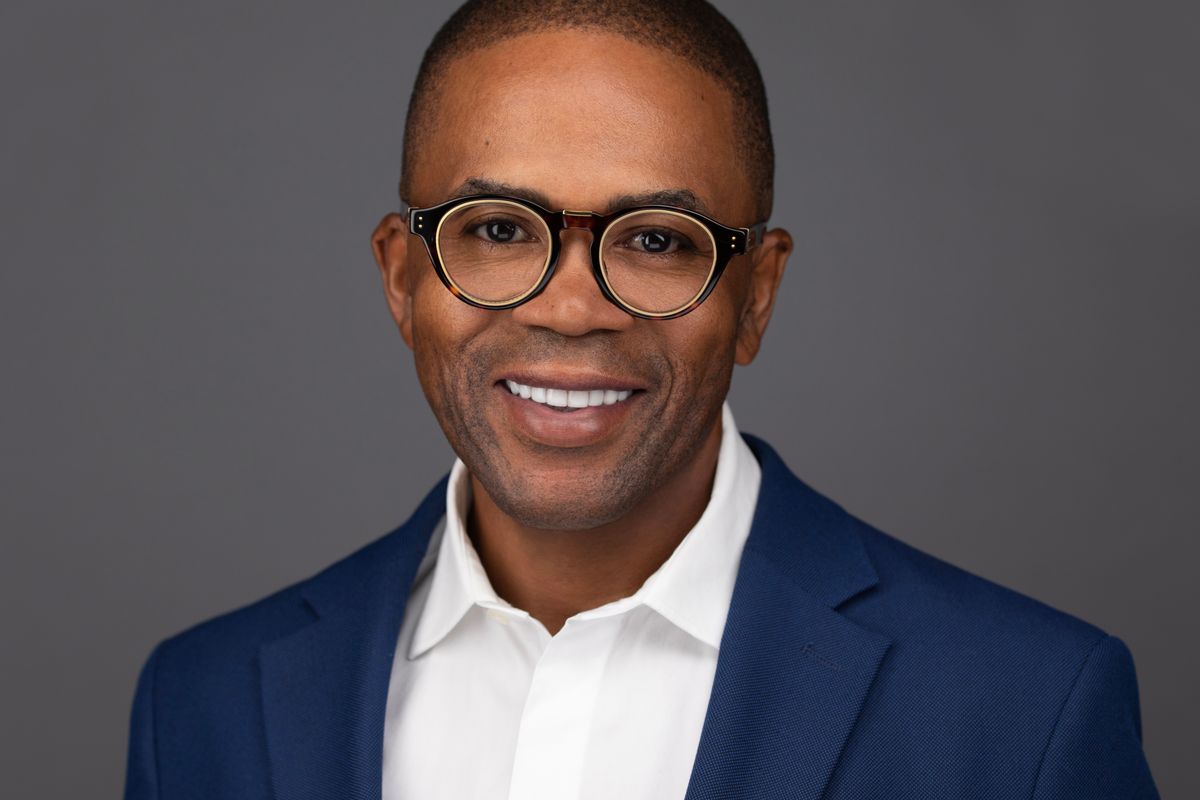
In early August 2025, I sat down with Nigel Francis and Ivona on their show "Connecting The Dots" on DBS Radio in Dominica. What was supposed to be a brief introduction turned into a two-hour conversation about my life, my journey, and the work that lies ahead. This is my attempt to share some of that story with a wider audience.
The Beginning: Delices, Dominica
I was born in 1969 in Delices — a small village in what was historically called the Carib Territory. My grandfather Fraronell Etienne, known as "Daddy Buck," and Ma Ma were some of the original founders of Delices and La Roche. He ran the post station there. My father was Pastor Samuel Augustine, and my mother was Pastor Lena Augustine — two people whose integrity and love for community would shape everything I became.
I left Dominica when I was five years old, bound for Canada with my family seeking the better life that so many of us were promised. But even though I spent most of my professional life in what they literally call "the great white north," Dominica never left me. It's in my bones. I come from that soil, and I've returned to it.
Growing Up in Oakville
My sister Deborah and I were among the first black children in our part of Oakville, Ontario — a rather affluent suburb of Toronto. We were middle class people living in the middle of affluent people. Some of my friends had swimming pools inside their houses. I never knew you could have a swimming pool inside your house.
I was blessed with a teacher in primary school who latched onto me and decided I was her pet — "the brightest thing she had ever seen." I flourished. My sister Deborah, one year behind me, had someone who thought differently about her potential, and she struggled initially before flourishing in high school. That experience underscored for me the immense value of teachers and people who believe in you.
Growing up in that environment taught me to code-switch, to adapt, to develop a tough skin while believing in myself internally. My father and mother always instilled in us: hold your head up high. Just because you're different doesn't mean you should achieve any less. As a matter of fact, you should achieve more. Those early years gave me skills that served me well for the rest of my career.
An Uncommon Road: From the Pulpit to Digital
My father was a technofile — an early adopter of personal computers. The Radio Shack TRS-80, the Commodore 64, the Vic 20 — we had them all. I was always the last one out of the computer science lab at my high school. I was going to study computer science at Waterloo.
But my father passed suddenly when I was twenty. I returned to Dominica for his funeral, and the church couldn't hold everyone. They moved it to the school and ran speakers up the road because there were so many people. In that moment, I understood that ministry was a way to touch lives. I made a sudden left turn.
I spent about eight years in ministry — first as a youth minister under Bishop Audley James at Revival Time Tabernacle, one of the largest Black congregations in Canada, then as senior minister at a planted work in Ajax, Ontario. It was fulfilling, exhausting, and formative. At 23, 24, 25 years old, grown people are saying "Pastor Dennis, how do I live my life?" — and there's a part of you that says, "What do you know about life quite yet?"
"There are things I learned as a minister that I carried into digital and into entrepreneurship and into building businesses. I understood that leadership is about service — it's about caring for people and loving them first."
On Leadership
People often ask what makes a good leader. I believe the very first thing is empathy — a genuine love for the people you lead. When I returned to Mahaut after my father's passing, someone in a store recognized me as "preacher's son." And the very first thing they said was: "Your father loved us so much." Not "we loved your father so much" — but he loved us. That is the essence of leadership.
Beyond empathy, you need competence — you have to be able to get the job done. And third, you need vision and the ability to communicate it. A boss tells you to go and do something. A leader says, "Come with me."
Through the Valley
Life has not been without its valleys. In 2010, my family experienced an unspeakable tragedy — the loss of my nieces Rachel and Sophia. It was a national conversation in Dominica. The grief, combined with the pressures of life, eventually led to my own breakdown around 2012. I sought help through cognitive behavioral therapy and found wisdom in the Stoic philosophy of Marcus Aurelius: the things that cause you pain are not what's happening in the world, but how you process them within.
I share this openly because we need to destigmatize mental health. An injury in the mind is an injury nonetheless — and what it deserves is care, triage, and love. You can recover. You can live a full, healthy life after such an injury. I'm proof of that.
The Digital Revolution
When I finally returned to the tech world, I brought everything I'd learned about leadership, purpose, and service with me. I co-founded TechGuilds, scaled it, and exited in 2017. I became a Founding Partner at Konabos Inc. and grew it over tenfold. Seven-time Sitecore MVP. 27 years in the industry.
But now the work that calls me is bigger than any single company. We are facing a new form of colonialism — digital colonialism. If someone controls your data, your narrative, your transactions, and knows more about your people than you do — are you still independent? As Yuval Noah Harari asks in Nexus: we have moved from physical extraction to digital extraction. Skills, minds, data.
"We are votes in the Senate close to digital slavery. I believe we need to start doing things in the Caribbean to protect ourselves because 2026, 2027 is too late."
The DX Alliance and the Caribbean's Opportunity
The good news? We can correct this with a pen. Literally — legislation that prioritizes the rights of the individual to own their digital self. Your ID, your data, your transactions. Government as steward, not owner. With sensible regulation, the Caribbean won't just catch up — we can lead in AI and digital innovation.
The DX Alliance has a memorandum of understanding with the University of the West Indies for a center of excellence in digital. We work with the Caribbean Telecommunications Union. We're building a regional database of digital professionals. And we're telling the stories that change the narrative — that digital excellence can look like us.
Feed My Sheep
After my mother's passing, I was asked to help put Feed My Sheep Dominica on solid footing. People came to me saying: "Your mother was my mother too." Physicians, professionals, families — all raised through that ministry. People can't hear you about their future if they're hungry. So we'll feed them first. We'll let them know they're loved. Then we'll move on to economic prosperity.
A Call to Action
To the diaspora: the prodigal sons and daughters of the Caribbean — come home. Or send your investments home. We are David fighting Goliath right now, digitally and economically. We need every resource we can muster.
If you're in Toronto, in London, in New York — what can you do next to be useful? Connect with us at dxalliance.org. If you want to support community work, reach us atfmsdominica.org.
The night cometh when no man can work. Let's get to it.
"It's been an uncommon but very interesting and rewarding road. I wouldn't change any of it for a second. There are things I learned as a minister that I carried with me into digital and into entrepreneurship. Because I understood that leadership is about service."